Fishing lodge videos
Allow outside video to load fishing lodge videos.

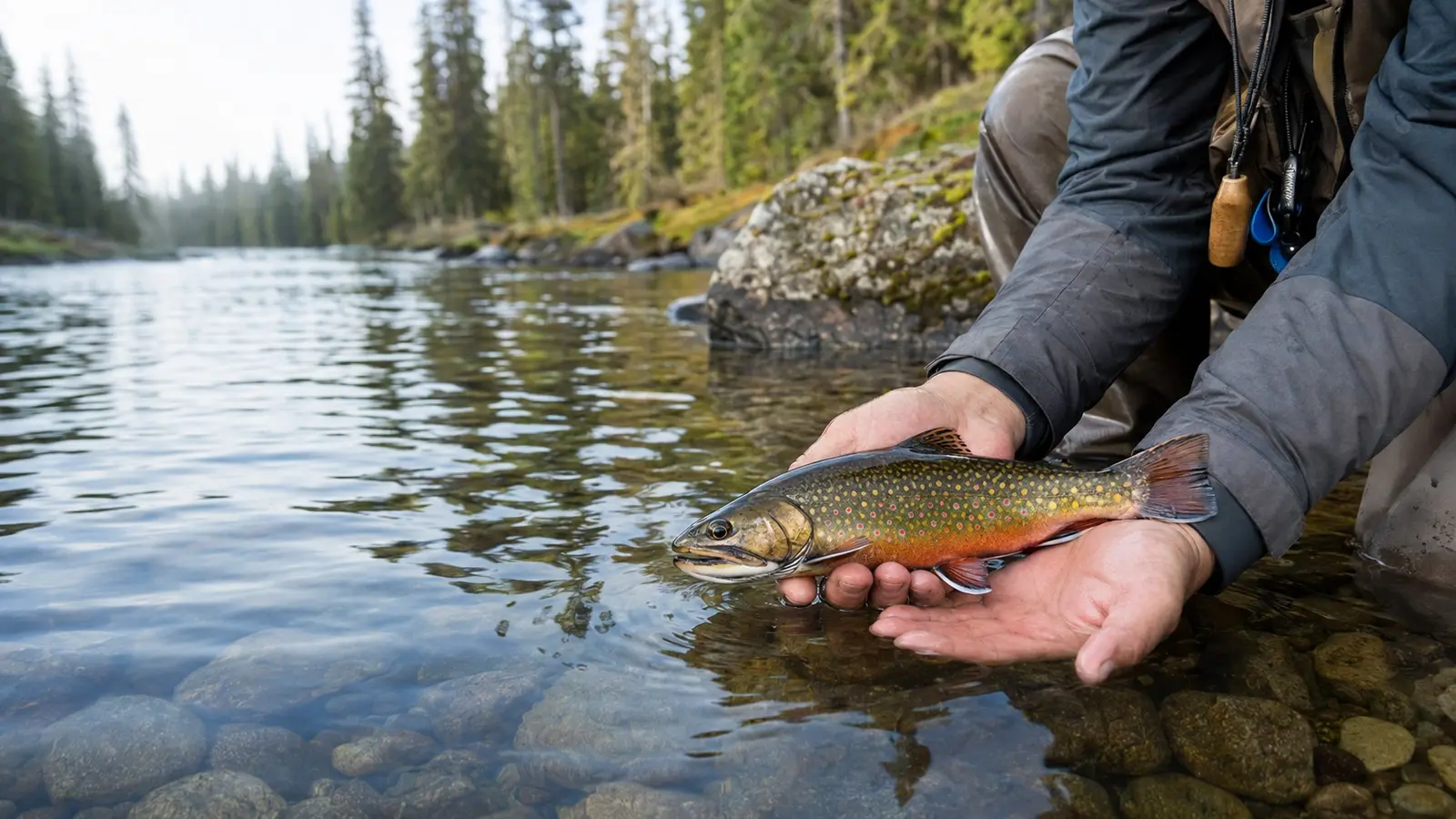
Ontario trout fishing ranges from tiny cold streams to inland lakes and the open Great Lakes. Each setting calls for different tackle, access and care.
Lake trout live in cold water and often relate to depth, temperature, baitfish and structure. During cool-water periods they may be reached closer to shore or higher in the water. As surface water warms, anglers often use electronics and controlled-depth trolling or vertical jigging. Deep-water fish need fast, careful handling and a sound release plan.
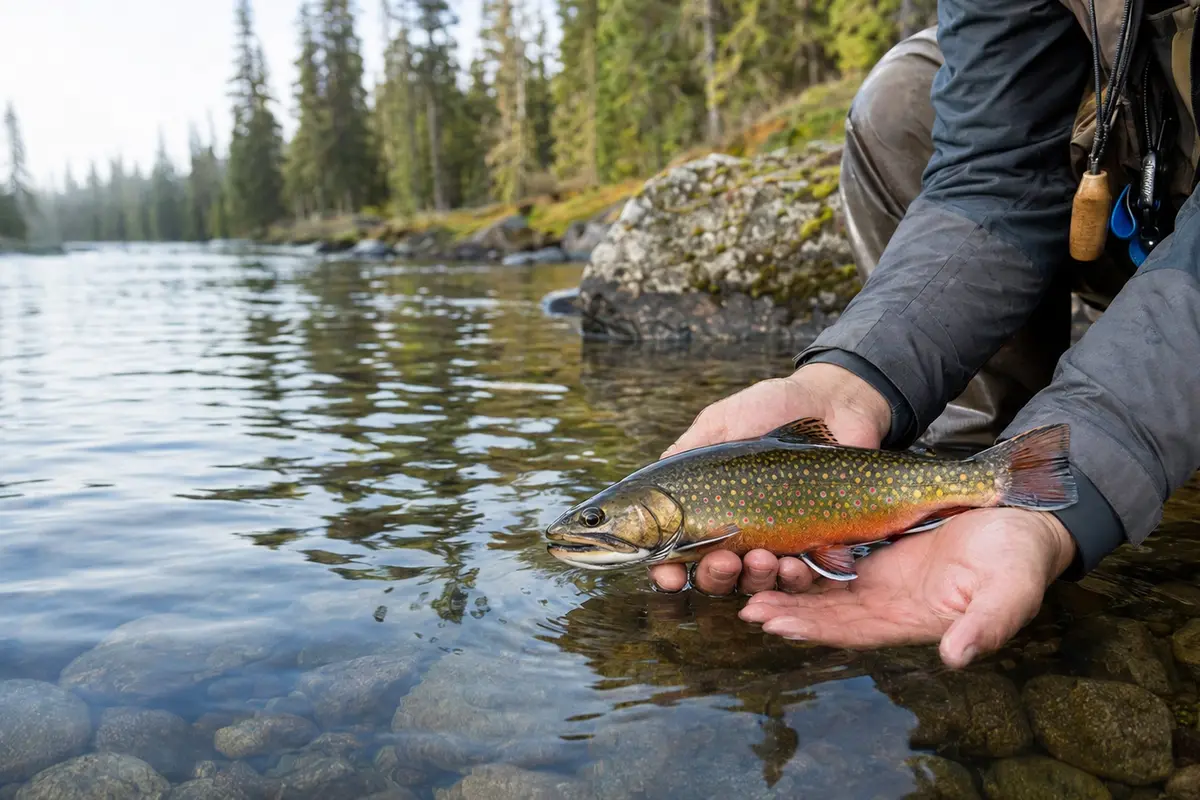
Brook trout favour cold, clean water. In lakes they may use rocky shorelines, points, inflows and deeper cool areas. River fish sit near current breaks, pools, undercut banks and cover. Small spoons, spinners, flies and natural presentations can work. Quiet movement and accurate casts matter on clear water.
Rainbow trout, brown trout, lake trout and several salmon species support charter and shore fisheries across the Great Lakes system. Methods vary by port, season and water temperature. Trolling spreads, river presentations and pier casting all have their place. A charter is often the easiest path for visitors who do not own big-water boats or specialized gear.
Warm water and long fights put added stress on trout. Use tackle matched to the fish, wet your hands and keep the fish in water as much as possible. Check local seasons, sanctuaries, bait rules and waterbody exceptions. Some small waters have added protection, and a rule from a nearby lake may not apply.
Rules and licence details change. Use the current provincial pages for legal and waterbody facts.
Video playback is held until you allow outside media in the cookie controls.
Allow outside video to load fishing lodge videos.
Allow outside video to load the Facts of Fishing channel.