Fishing lodge videos
Allow outside video to load fishing lodge videos.

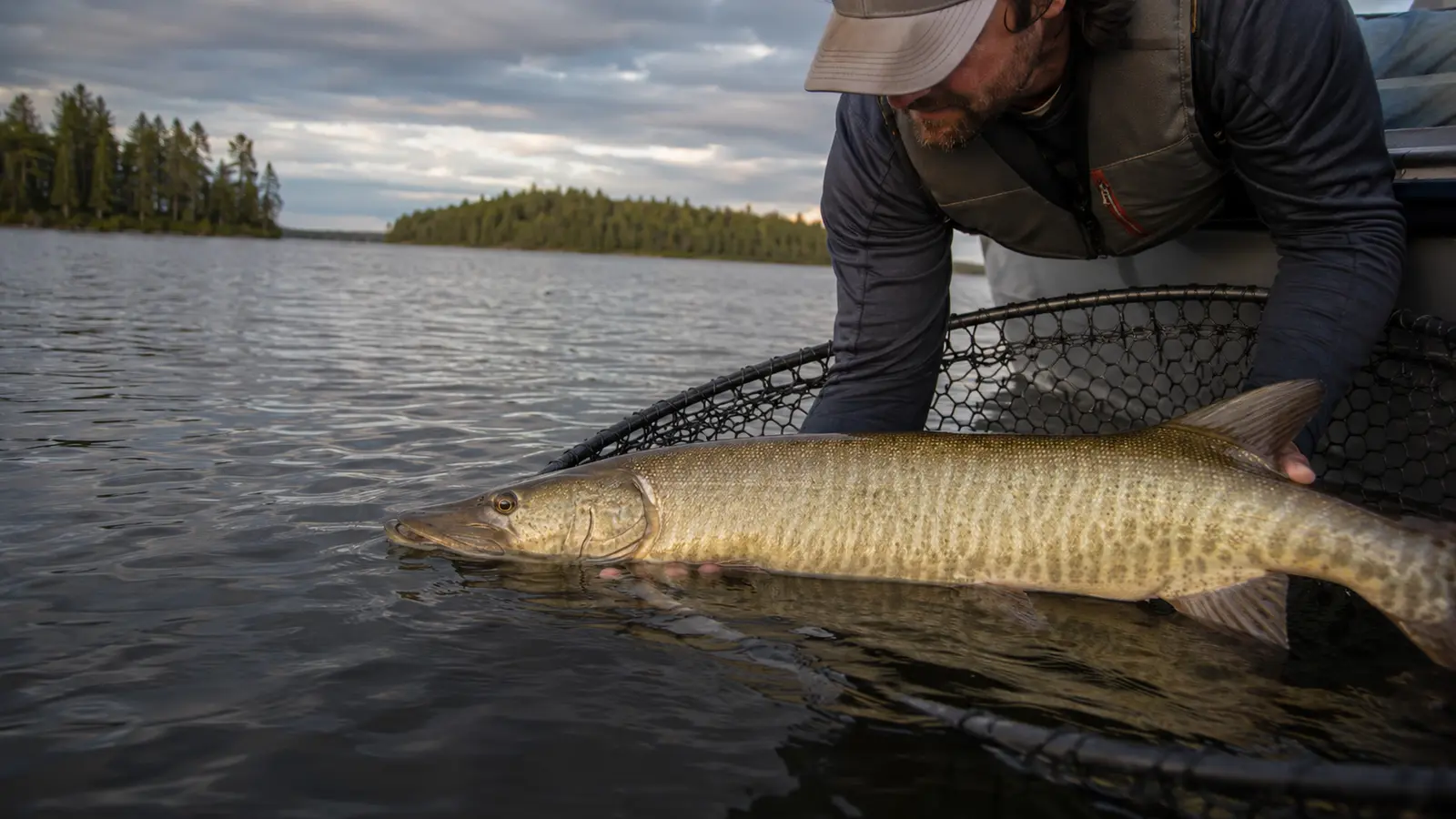
Muskie fishing is built around effort, careful preparation and short moments of high speed. The release plan is as important as the lure plan.
Muskie use weed edges, rock points, saddles, reefs, current areas and open-water bait schools. They may follow a lure without striking, so every cast can give useful evidence. Mark follows, note wind and light, then return when conditions shift. On large lakes, a local guide can help a group fish productive routes without losing days to travel.
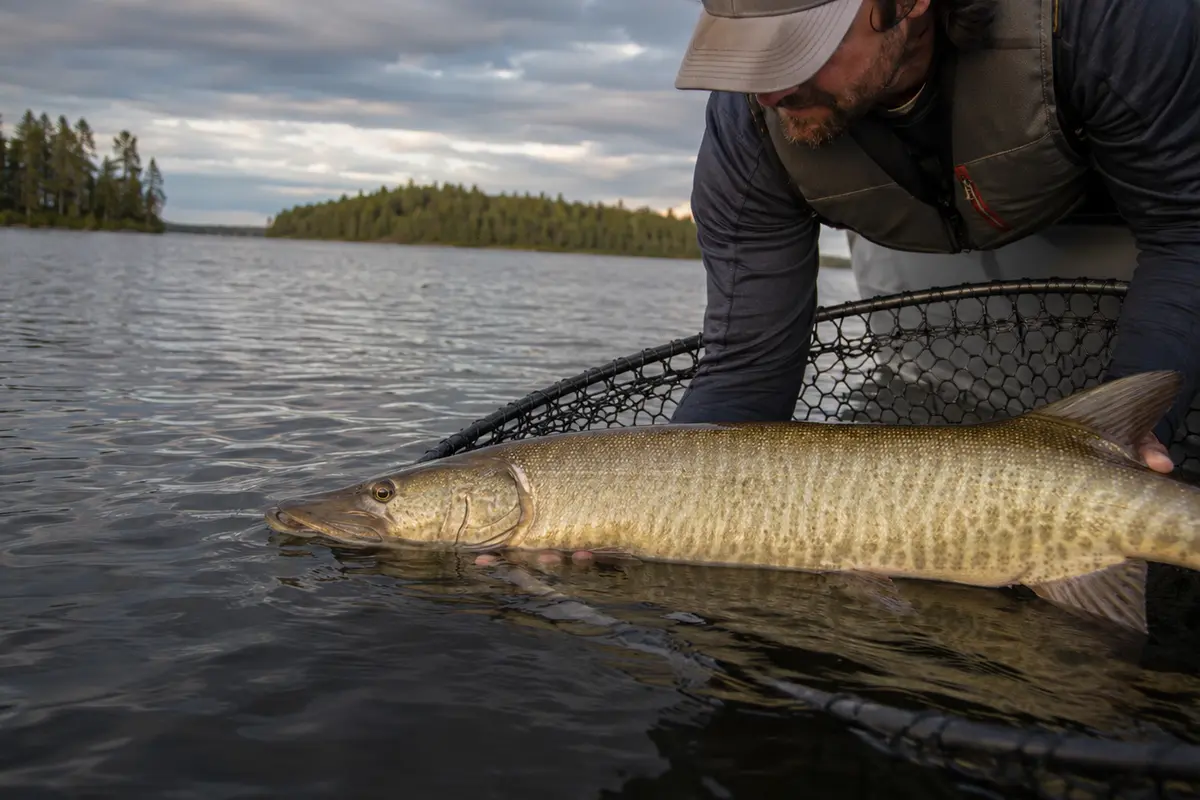
Casting lets anglers work defined cover with bucktails, jerkbaits, topwater lures and large soft baits. Trolling covers open water, long breaks and travel lanes with repeatable depth and speed. Both methods require stout rods, strong line, dependable leaders and sound knots. Check every connection often because one weak part can end the only chance of the day.
Use a large coated or rubber net, long pliers, hook cutters, protective gloves and a camera that is ready before the fish comes aboard. Keep the fish in the water while hooks are removed. Support it horizontally for a brief photo and return it quickly. Never hang a muskie by the jaw or spend time searching for tools after landing it.
Some anglers want a guided day close to a city. Others want a week on a northern lake with room to search. Ask a guide or lodge about boat size, weather limits, casting space, trolling gear, release tools and backup species. Muskie trips involve fewer bites, so a clear group expectation makes the trip better.
Rules and licence details change. Use the current provincial pages for legal and waterbody facts.
Video playback is held until you allow outside media in the cookie controls.
Allow outside video to load fishing lodge videos.
Allow outside video to load the Facts of Fishing channel.