Fishing lodge videos
Allow outside video to load fishing lodge videos.

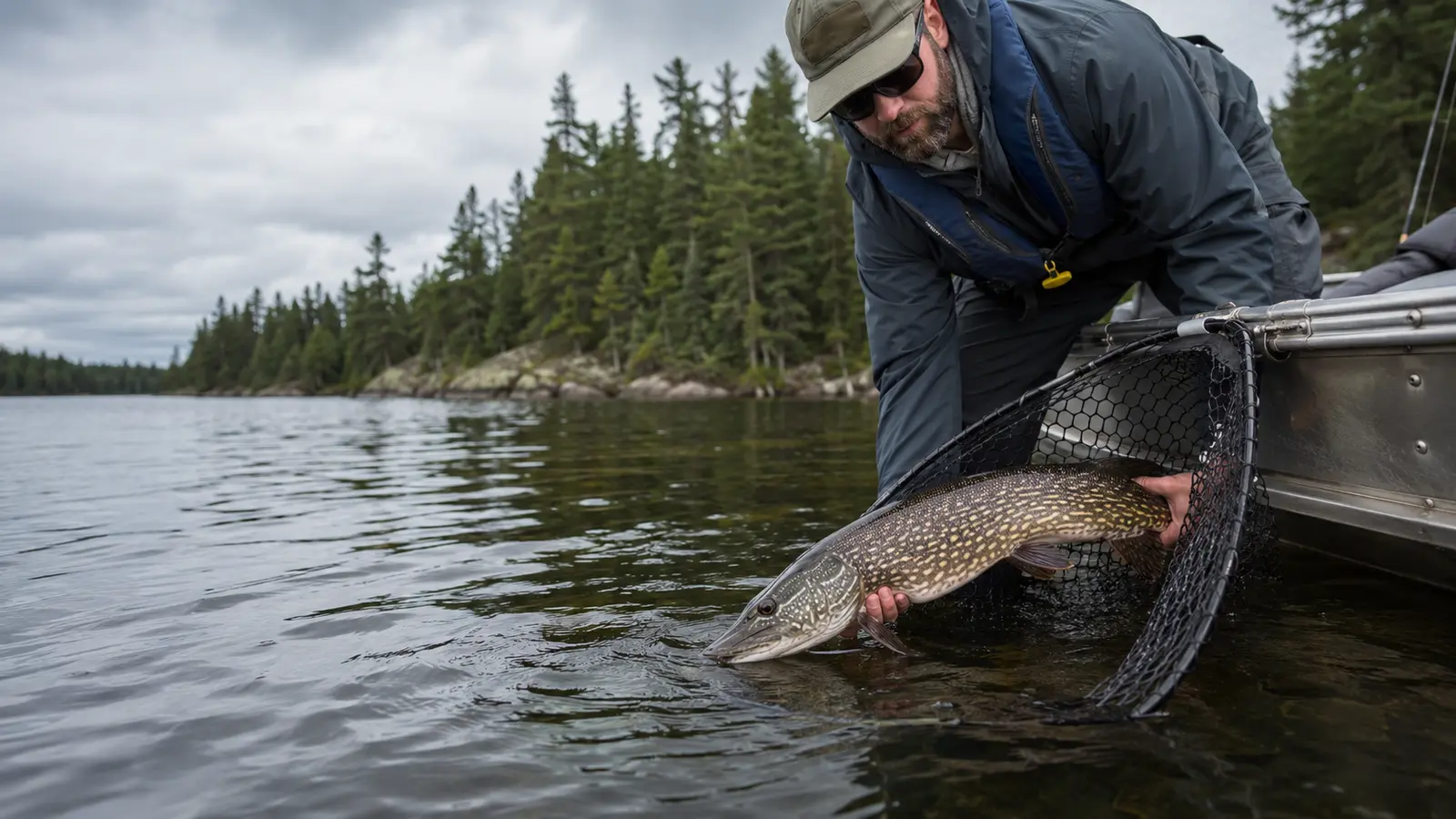
Northern pike give Ontario anglers visual follows, sudden strikes and strong runs. They also demand good release tools and careful hands.
Pike use cover and ambush routes. New weeds, flooded grass, reeds, cabbage beds, points and the mouths of shallow bays can all hold fish. Bigger pike may move deeper or sit close to cool water and large baitfish. A slow pass around cover can show follows even when fish do not strike, giving you a place to revisit later.
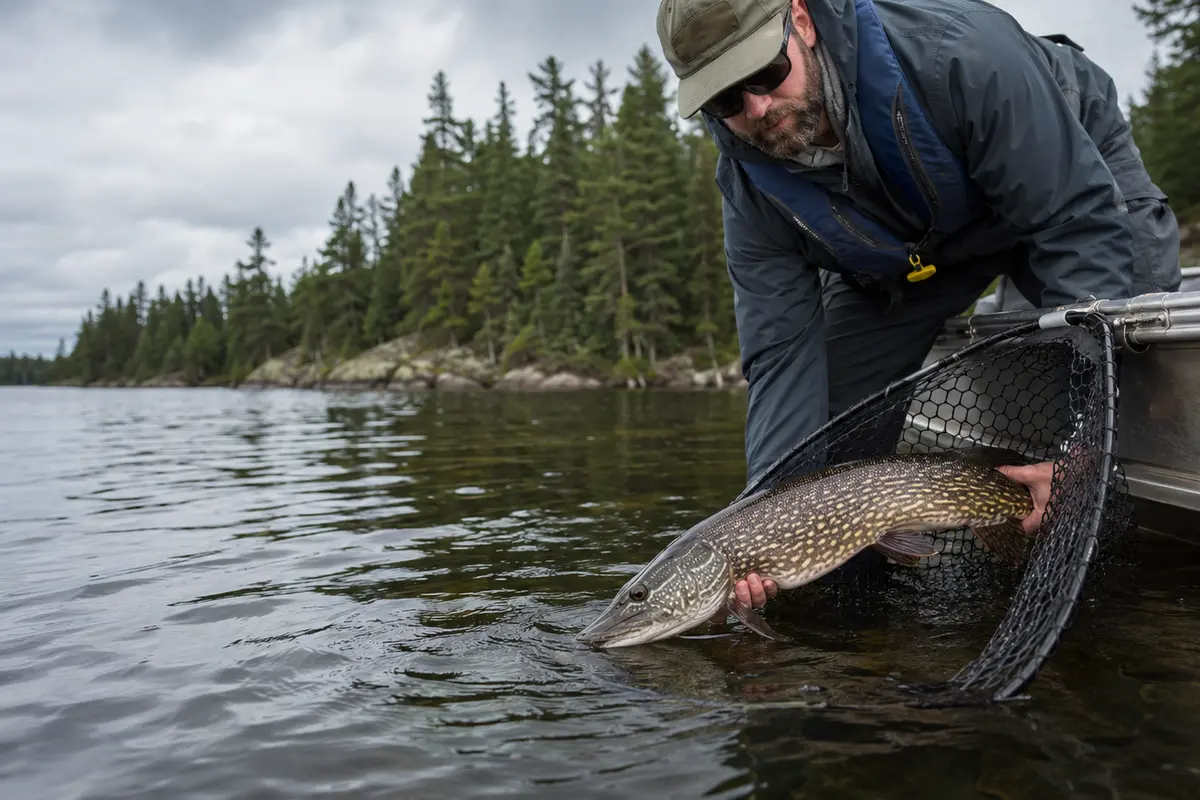
Spoons are easy to cast, resist weeds and flash in stained water. Spinnerbaits work around reeds and broken weeds. Jerkbaits and minnow plugs pause in a fish's face, while large soft baits can be worked slowly along edges. Use a leader built for teeth and inspect it after each fish. Heavy enough tackle cuts fight time and helps a strong release.
A wide rubber net acts as an in-water holding pen while hooks are removed. Long pliers, jaw spreaders used with care, hook cutters and spare hooks belong within reach. Keep fingers away from gill rakers and teeth. If a hook is buried, cutting it may be safer than a long struggle. Plan the photo before lifting the fish.
Many road-access and fly-in lodges offer pike water, but the setting varies. Some trips focus on action in sheltered bays. Others target fewer, larger fish on broad lakes. Ask about average travel distance, boat size, guide help, release gear and whether wind can close off main-lake areas. The answer may matter more than a trophy claim.
Rules and licence details change. Use the current provincial pages for legal and waterbody facts.
Video playback is held until you allow outside media in the cookie controls.
Allow outside video to load fishing lodge videos.
Allow outside video to load the Facts of Fishing channel.